How to Navigate the Complex Landscape of Software and Technology Export Controls
14.6.2024
Masterminds - Maisteriainesta
The early 2020s were marked by turbulence, and the resulting economic sanctions have profoundly impacted exporting companies around the world. At the same time, groundbreaking advancements in digital infrastructure, such as generative AI and intelligent automation, have sparked debates about regulations governing software and technology export controls in leading nations. These discussions aim to protect competitive advantages and shield nations from emerging threats such as advanced cybercrime and electronic surveillance by foreign entities. As a result, export control restrictions are becoming increasingly complex. I have taken up this topic to help the company that I work for to make sense of these complex regulatory issues.
Challenge: Understanding the Regulatory Framework
Given the lack of maturity in multilateral processes and national regulations, companies in the software and technology sectors must proactively prepare for new restrictions and controls. Non-compliance with foreign trade laws can lead to legal, financial, and reputational risks. Moreover, macroeconomic trends, including the global economic shift and rising protectionism, will continue to impact organizations involved in export activities. Ignoring exports, that are intangible in nature, is no longer an option. What the technology industry should have learned from the unprecedented economic sanctions of 2022 and the uncertainties surrounding global treaties is that proactive trade compliance is essential.
Master´s Thesis Offers an Approach
My Master’s thesis offers a thorough review of existing knowledge on software technology export controls, regulatory frameworks, and best practices in both the United States (US) and the European Union (EU). This information has been synthesized into a conceptual framework to help co-create an export compliance framework tailored to software offerings. The goal is to mitigate the risk of non-compliance within the sponsor organization and to clarify the roles and responsibilities of stakeholders in the export compliance process. This process involves business conduct due diligence and adherence to export control regulations, which typically cover four main categories: product controls, end-user controls, export destination controls and controls on the actual end-use.
The Wassenaar Arrangement serves as the umbrella for export control regulations. It is a multilateral, non-binding international forum that facilitates the exchange of views and information on international trade in conventional arms and dual-use goods and technologies. The EU and the US have integrated the Wassenaar Arrangement control lists into their legislative frameworks and operational practices. The US has more comprehensive legislation regarding software product-related controls, while the EU has delegated most software-specific regulations to its member states.
Key Considerations in Software Technology
When it comes to software technology classification, important aspects include encryption features and the functionality of software embedded in dual-use classified end products. The US also monitors the re-export of US-made technology in exports outside its borders. Therefore, all software product development should consider both US and EU legislation when working in international markets. A common element across the Wassenaar Arrangement, the US, and the EU concerning software and technology is the inclusion of information security within their respective national regulations.
Solution: A Tool for Export Compliance
Drawing from the information security domain, a tool for further content analysis was selected; the People, Process, and Technology framework introduced by Information Security and Privacy expert Bruce Schneier in 1999. This framework became a foundational concept in cybersecurity, emphasizing that when one element changes, the other two must also adapt to maintain a balanced and effective response to change. Schneier (2013) stressed that security should not solely rely on technology but should also incorporate people and processes into a comprehensive security system. The same principle applies to the export compliance landscape.
To prevent confusion regarding Technology terminology in export control regulations, the Technology element was modified in the thesis to represent the actual end product, transforming the framework into the People, Process, and Product (PPP) matrix. During the co-creation process with stakeholders, the PPP elements were evaluated through the four categories of export control. Identified findings and related regulatory aspects were consolidated into a matrix, with each cell color-coded to identify the responsible entity. This matrix was designed as a tool to assist in risk mitigation within the export compliance process for software offerings at the sponsor organization. It aims to verify and monitor software exports and clarify the roles and responsibilities of different stakeholders.
Preparing for the Future
To thrive, businesses must accelerate innovation, enhance risk management, and meet increasingly demanding expectations. Effectively designing and managing their people, processes, and product controls during times of change can provide the necessary insight and understanding to achieve these goals. Consequently, companies engaged in the software and technology business should proactively prepare to adopt new restrictions and controls as they are introduced. By doing so, they can navigate the complex landscape of export controls and ensure compliance in an ever-evolving global market.
About the author
Aino Herranen is a graduate of Master´s degree program in Business Informatics. Aino has a keen interest in technologies and export compliance, and has selected this area for doing her Master´s thesis.
References:
Herranen, Aino. 2024. Building an Export Compliance Framework: Intangible Technology Transfer – Software offerings. Metropolia University of Applied Sciences. Master’s Thesis.
https://www.theseus.fi/handle/10024/856483
Schneier, Bruce. 2013. "People, Process, and Technology". Blog. Pulished 30/01/2013.
https://www.schneier.com/blog/archives/2013/01/people_process.html
This document benefited from the use of OpenAI's ChatGPT for grammar and style checks.
Will commercial drones occupy our urban sky?
14.1.2021
Masterminds - Maisteriainesta
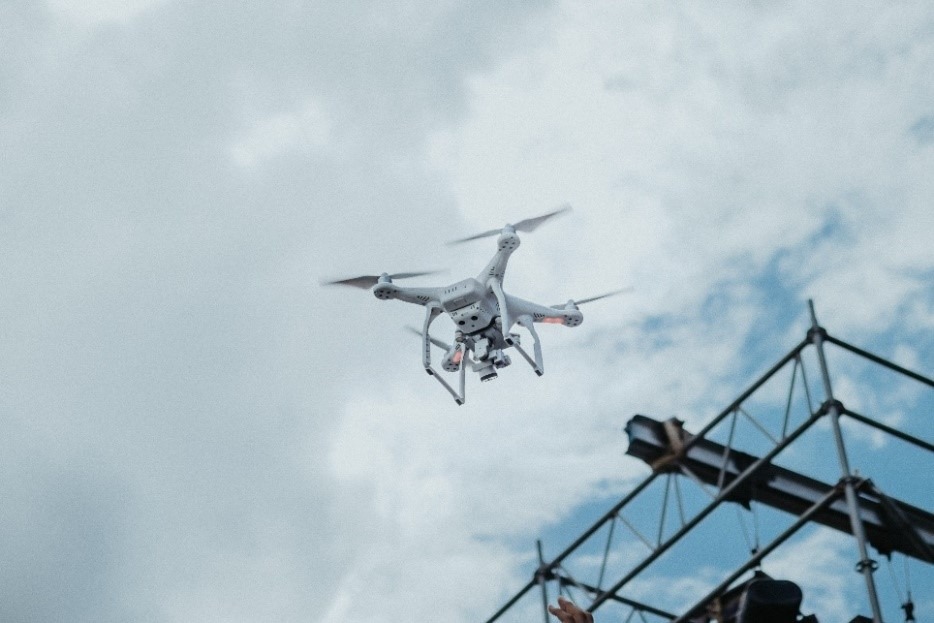
What are drones? And how can they be used now and in the future. By using drones the border could be monitored automatically, post packages could be delivered to recipients using a straight line distance route, cities and fire departments could pre-install drones in every neighborhood to guide their brigades and monitor the situation. Furthermore, drones will be doing many different jobs soon.
From manual processes to new technology
It is year 2020, and we are facing a global pandemic. When entering to public spaces, we should wear a face mask and, if only possible, reduce our social contacts to a minimum. Whether we like it or not, we are driven to utilize various technology – do online shopping for groceries; order ready-made meals from local restaurants; exercise in front of a PC screen; book an e-doctor appointment, and constantly monitor our smart phone for COVID exposure alerts.
Digitalization is already enabling many things to be consumed without leaving our home. But the back-office processes enabling these B2C services are getting busier all the time. In many cases, these processes still require manual steps – for example, in the form of collect and deliver, or collect and grab yourself. Collectors fill in food baskets in grocery stores, and then couriers drive these packages up to the door of our house where they drop them off, often without visible contacts. What if there would be a way to streamline these manual processes with a new technology even further? With drones, maybe?
What are drones?
Drone, or an Unmanned Aerial Vehicle, is an aircraft without a human pilot inside. It can be remotely piloted or totally autonomous, and be equipped with various other gadgets needed to perform the mission it is designed for. The most common gadget is still being a high-resolution camera known from those leisure drones available from various electronic stores. But that’s not all.
There are also commercial drones which are equipped to complete different kinds of use cases and tasks, from lifting and delivery to very specific scenarios such as possibly acting as a mobile cellular network base station in emergency areas. The technology and regulation are starting to mature for long distance BVLOS (Beyond the Visible Line of Sight) operations, which will enable significantly more use cases for drones.
How can drones be used?
But the future perspective for using drones could be even wider, if we stretch from the private sector services into the needs of the public sector. There are plenty of actors in governmental and municipality sector which might benefit from using drones. For example
customs and border forces could monitor the border automatically or from the operations centers, without sending the troops to patrol on the border zone
postal offices could deliver packages to recipients using a straight line distance route, without worrying about traffic jams
cities and fire departments could pre-install drones in every neighborhood to guide their brigades and monitor the situation already on their way to the emergency site.
There are also multiple other opportunities.
Drone software for public sector use
My Master’s thesis focused on conducting a market analysis of the drone industry in the European public sector context. It was done to support an initiative to develop a drone software for public sector use. Based on the findings, it seems that the business environment is becoming more favorable for emerging technologies and completing those tasks that previously seemed fantastic and far-away, but recently have become vital for the Western society to keep running during the pandemic times in order to support our everyday lives.
This change is helped by European wide drone regulation being developed by EU in order to support these new possibilities, as well as the population ageing, and urbanization driving more people to the cities, which brings more pressure on services and the customers closer to these services to be consumed.
At the same time, based on CompTIA research from the US market, drone operators are beginning to purchase the drone management-as-a-service (over building the solution from different components by themselves), which might reduce the time-to-market in Europe. This is what we can see as the firm signs of development in this industry, and these signs are only accelerating.
Now and in the future
Now after completing my studies, it is nice to realize that are we going to see drones doing different job already soon – delivering our medicine form pharmacies, police monitoring mass events and crowd behavior, and central kitchens delivering food to the elderly or handicapped to their homes? There are lots of possibilities, but this time is right for the emerging technologies. So let’s to look into the sky, unless it is something more hidden from our sight.
About the author
[caption id="attachment_3865" align="alignleft" width="273"] Samuli Kipponen[/caption]
Samuli Kipponen is a fresh MBA graduate from Master´s Programme in Business Informatics at Metropolia UAS. Samuli completed his Master´s thesis project for the Innovation Hub at Metropolia UAS focusing on Smart Mobility that started an initiative to develop a drone software for public sector use. The outcome of Samuli´s study is the market analysis for applying for funding for the drone software initiative.
References
Kipponen, S. (2020). Defining the Market Potential of Industry Specific Drone
Software. [PDF] Master´s thesis. Metropolia University of Applied Sciences.
CompTIA 2019. The Drone Market: Insights from Customers and Providers. [Online]
(Accessed 10th of November 2020)
European Commission 2020a. Unmanned Aircraft. [Online]
(Accessed 7th of October 2020)
Ericsson 2020. Ericsson mobile network-on-a-drone PoC could transform emergency response. [Online] (Accessed 13th of January 2021)










Kommentit
Ei kommentteja